Introduction
If you’re part of a First Nations organisation working on a clean energy project, there’s a significant new funding opportunity worth knowing about. The Department of Climate Change, Energy, the Environment and Water has opened the First Nations Clean Energy Projects Pilot Grants, a program designed to help First Nations organisations take their clean energy projects from the planning stage all the way to financial close.
This isn’t a small grant. We’re talking about a total pool of up to $10 million, with individual grants ranging from $1 million to $10 million each. That’s a substantial amount of funding, but it comes with a catch: only up to two organisations nationally will receive funding. This is one of the most concentrated, high value grant opportunities we’ve covered, and it’s also one of the most competitive.
In this article, we’ll walk you through everything that has been officially published about this grant: how much money is on offer, who might qualify, what the funding can be used for, key dates, and what you should be preparing right now. We’ll also flag clearly where the official guidelines haven’t published full details yet, so you know exactly what to check before you consider applying.
This grant was announced as part of the Australian Government’s First Nations Clean Energy Strategy, a broader push to make sure First Nations peoples and organisations are active participants and beneficiaries in Australia’s shift towards clean energy, not just bystanders to it.
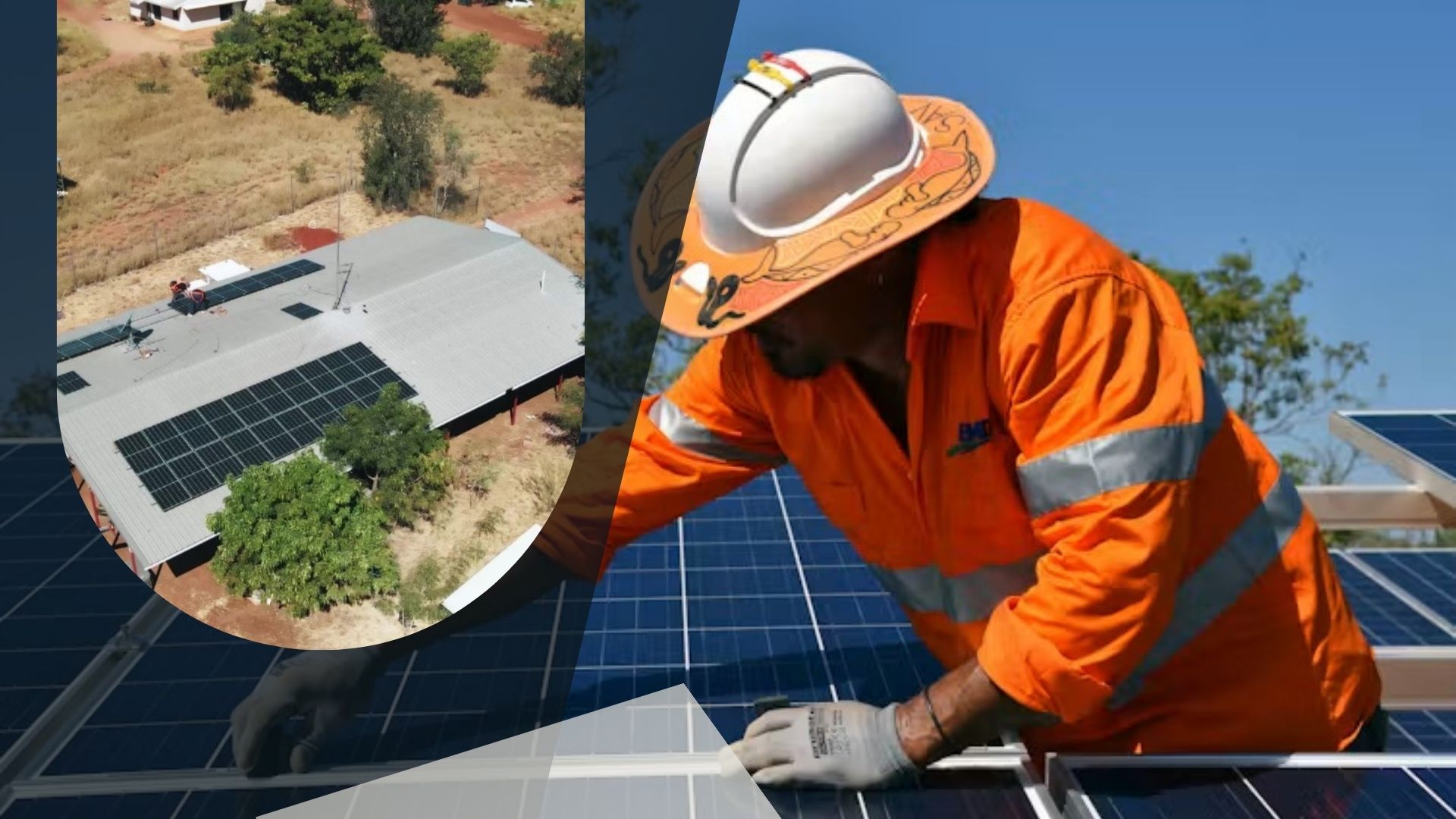
First Nations Clean Energy Grants
Think of this grant like a bridge. Many clean energy projects (things like solar farms, wind projects, battery storage, or other renewable energy developments) go through a few key stages: an idea, then a feasibility study to check if the idea is workable, then a period of getting all the pieces lined up (approvals, partners, financing) before the project reaches “financial close”, which is the point where the money is locked in and construction or implementation can actually begin.
A lot of projects get stuck in that middle stage. They’ve proven the idea is feasible, but they can’t quite get over the line to financial close because that stage often requires significant capital, specialist expertise, and the ability to absorb risk that many organisations, especially First Nations organisations, haven’t historically had equal access to.
This grant program exists specifically to help close that gap. According to the official program description, it provides funding to First Nations organisations to progress their clean energy projects beyond feasibility towards financial close.
The program has three stated objectives:
- Support up to two First Nations organisations to progress their clean energy projects beyond feasibility towards financial close.
- Build evidence of the factors that enable increased investment in First Nations clean energy projects, essentially learning what works so future projects can benefit.
- Share the lessons learnt from First Nations clean energy project development with the broader sector, so other First Nations organisations and clean energy stakeholders can benefit from what’s discovered.
The intended outcome, as stated by the Department, is to support the economic development and self-determination of First Nations peoples through increased opportunities to lead and benefit from clean energy project developments. In other words, this isn’t just about building clean energy infrastructure. It’s about making sure First Nations organisations are the ones leading these projects and capturing the economic benefits, not just hosting projects that are owned and run by someone else.
How Much Funding Is Available
Let’s break down the numbers clearly, because they matter a lot for understanding whether this grant is right for your organisation:
- Total funding pool: up to $10 million
- Individual grant size: $1 million to $10 million per project
- Grant rate: up to 100% of eligible expenditure can be covered
- Number of recipients: up to 2 organisations nationally
What this tells us is that this program is designed for a very small number of large, significant projects, not a wide spread of smaller grants. If the full $10 million pool is split between two recipients, that could mean two grants of around $5 million each, or it could be one $10 million grant and nothing left over, or two grants of different sizes within the $1 million to $10 million range. The exact split will depend on the applications received and the funding decisions made by the Department.
The fact that funding can cover up to 100% of eligible expenditure is notable. Many government grants require the applicant to contribute a portion of project costs (known as co-contribution or matched funding). This program’s description states funding can be up to 100% of eligible costs, which removes one of the biggest barriers many organisations face when applying for large grants: having to find matching capital themselves.
It’s worth being realistic here. With such a small number of recipients and such a large total pool, this program is aimed at organisations with clean energy projects that are already well developed, likely projects that have already been through a feasibility study and are close to being investment ready. If your project is still at a very early, conceptual stage, this may not be the right funding round for you right now, though it’s worth checking the official GrantConnect listing to confirm eligibility rather than ruling yourself out based on assumptions.

Who Qualifies
The grant is open to First Nations organisations. That much is clear from the official program information. However, the full and specific eligibility criteria, including exactly how “First Nations organisation” is defined for the purposes of this program, what ownership or governance structures qualify, and any other eligibility conditions, have not been published in the notification we have access to.
This is genuinely important: rather than guess or assume what the eligibility criteria might be, we want to be upfront with you. The complete eligibility criteria and application requirements are published on the official GrantConnect listing, and you should check there directly before assuming your organisation does or doesn’t qualify.
To help you get a general sense of whether a grant like this might suit your situation, Grants Assist’s eligibility assessment tool can be a useful starting point for narrowing down which funding programs are worth a closer look. You can use the eligibility assessment tool on our site to help think through your organisation’s situation before you dive into the official guidelines.
Who Does NOT Qualify
Based on what has been published, this program is specifically for First Nations organisations. Organisations that are not First Nations-controlled would not be expected to qualify for this particular grant round, since the program’s stated purpose and eligibility focus is squarely on First Nations-led clean energy project development.
Beyond that general point, we can’t confirm further specific exclusions because they haven’t been detailed in the source information available to us. If you’re unsure whether your organisation’s structure or ownership meets the requirement, this is exactly the kind of question you’d confirm using the details on the official GrantConnect listing, or by using the contact details listed on that official listing to ask the Department directly.
It’s also worth repeating a critical point: with only up to two recipients nationally, this is an extremely limited, highly competitive program. Even organisations that clearly meet the eligibility criteria on paper will be competing against other well qualified applicants for a very small number of places. This isn’t a program where meeting the minimum bar is likely to be enough. Applicants will need a genuinely strong, well developed project to be competitive.

What the Funding Can Be Used For
The stated purpose of the funding is to help First Nations organisations progress their clean energy projects beyond the feasibility stage towards financial close. In practical terms, this suggests the funding is intended for activities that sit between “we’ve proven this project is feasible” and “we have the finance locked in and are ready to build.”
That could potentially include things like detailed project development work, structuring, due diligence, or other steps needed to get a project investment ready, though the notification does not provide an itemised list of eligible expenditure categories. Because the specific list of what counts as “eligible expenditure” has not been published in the information we have, we’d strongly recommend not assuming what will or won’t be covered. Instead, check the detailed guidelines on the official GrantConnect listing, which should set out exactly what activities and costs the grant can and can’t be spent on.
What we can say with confidence, because it’s explicitly stated, is that eligible expenditure can be funded at up to 100% by the grant, and that the overarching goal of that spending is to move a project from “feasible” to “financially closed.”

Key Dates and Deadlines
Mark this date clearly: the grant closes on 28 September 2026 at 5:00pm ACT Local Time.
A few practical points about this deadline:
- ACT Local Time means Canberra time (Australian Eastern Standard Time, or Australian Eastern Daylight Time if daylight saving is in effect at that time of year). If your organisation is in a different time zone, such as Western Australia, Queensland, South Australia, or the Northern Territory, make sure you convert the deadline to your local time zone and build in a buffer. Don’t assume “5pm my time” equals “5pm ACT time.”
- Government grant portals frequently experience heavy traffic in the final hours before a deadline, and late submissions are typically not accepted no matter the reason. Aim to submit well before the actual cut-off, ideally at least a day or two early.
- Given that this is a large, complex funding round (multi-million dollar projects requiring you to demonstrate progress toward financial close), the application itself is likely to require significant preparation time. Waiting until the last few weeks before the closing date to start preparing would be a high-risk approach.
As of today, if you are considering applying, you have a defined window of time, but for a grant of this size and complexity, that time should be used efficiently and started as early as possible.
Documents You May Need
Based on the nature of this program (a grant that requires demonstrating a project is already past feasibility and moving toward financial close), it would be reasonable to expect that a competitive application will likely need to draw on:
- Evidence that a feasibility study or equivalent assessment has already been completed for the project
- Financial information relevant to demonstrating the project’s path to financial close
- Information establishing the organisation’s status as a First Nations organisation, per whatever definition the guidelines set out
- A clear project plan or roadmap showing what the requested funding would specifically be used for
Again, this is general reasoning based on what this type of grant typically requires, not confirmed application requirements. Please treat it as a starting point for your own planning, not a substitute for the official guidelines.
Common Mistakes to Avoid
Whether or not the exact requirements of this specific program are fully public yet, there are some general, well established grant-writing mistakes that trip up applicants across almost every government funding program. These are safe, general best practices, not claims about this specific program’s requirements:
- Missing the exact closing time, not just the date. Applicants sometimes focus only on the date (28 September 2026) and forget the deadline is a specific time (5:00pm ACT Local Time). Submitting even a few minutes late can mean automatic disqualification in most government grant systems.
- Not clearly demonstrating self-determination and economic benefit outcomes. Since the program’s stated intended outcome is about First Nations peoples leading and benefiting from clean energy projects, applications that don’t clearly articulate how the project supports First Nations leadership and economic self-determination, rather than just describing the technical clean energy project itself, may be weaker than they need to be.
- Unclear or unrealistic budget breakdowns. For a grant that can fund up to 100% of eligible expenditure and ranges from $1 million to $10 million, funding bodies will want to see a credible, detailed, and well justified budget.
- Applying without confirming eligibility first. Given that full eligibility criteria are published on the official GrantConnect listing rather than in the general notification, applicants should confirm eligibility in detail before investing significant time in a full application.
- Underestimating the competition. With only up to two recipients nationally, treating this like a “standard” grant application process could lead to an underprepared submission.
- Leaving the application to the last minute. Complex, high-value applications like this one typically require input from multiple people, and rushing this process increases the risk of errors or a weaker submission.
How Competitive Is This Grant?
Very. This needs to be stated plainly: with a total pool of up to $10 million and individual grants of $1 million to $10 million, but only up to two organisations nationally receiving funding, this is one of the most concentrated and competitive grant programs currently available to First Nations organisations in the clean energy space.
To put it in perspective, this isn’t a program where dozens or hundreds of applicants might all receive some funding. It’s a program where the vast majority of applicants, even strong, well qualified ones, will not receive funding, simply because there are only two places available nationally. If your organisation is considering applying, it’s worth going in with clear eyes about this level of competition, and making sure the application you submit reflects the seriousness and scale of what’s being asked for.
What to Prepare Now
If your organisation is seriously considering this opportunity, here’s what makes sense to start on now, even before the full guidelines are reviewed in detail:
- Confirm your project’s stage. Since this grant is specifically for projects that have moved beyond feasibility, check that your project genuinely fits that description.
- Pull together your existing feasibility and project documentation.
- Start internal conversations early. Given the scale of funding involved ($1 million to $10 million), make sure your organisation’s leadership and governance structures are engaged early.
- Visit the official GrantConnect listing directly. Search “GrantConnect” and look for the First Nations Clean Energy Projects Pilot Grants listing to review the full guidelines, eligibility criteria, and application form requirements.
- Note the deadline in your calendar now. 28 September 2026, 5:00pm ACT Local Time, with enough buffer built in to submit early.
Related Funding Options
If this particular grant doesn’t turn out to be the right fit for your organisation, whether because of project stage, eligibility, or the highly competitive nature of only two national places, it’s worth knowing there are other funding pathways that support First Nations organisations and communities.
For organisations focused on workforce development rather than clean energy infrastructure specifically, our article on the Indigenous Workforce and Skills Development Grant in Queensland covers a state-based funding option aimed at building skills and employment pathways.
At the Commonwealth level, organisations working in media and broadcasting may find our coverage of the Indigenous Broadcasting and Media Grant useful, as it outlines a separate national funding stream supporting First Nations media organisations.
Both of these programs have different objectives and eligibility settings to the clean energy grant covered in this article, so it’s worth reading each one on its own terms rather than assuming the same rules apply across the board.
Want to Keep Exploring Your Options?
Want to keep exploring your options? Grants Assist’s online portal gives you access to detailed, regularly updated information on grants and assistance programs across Australia. Explore the Grants Assist portal to browse more programs like this one, or call us on 1300-005-999 to speak with one of our advisors.

Frequently Asked Questions
How much funding can my organisation apply for under this grant?
Individual grants range from $1 million to $10 million, with a total program pool of up to $10 million available across all successful applicants. Funding can cover up to 100% of eligible expenditure.
How many organisations will receive funding?
Only up to 2 First Nations organisations nationally will be funded under this program, making it a highly competitive, limited-place opportunity.
When does the grant close?
Applications close on 28 September 2026 at 5:00pm ACT Local Time. Make sure to convert this to your own time zone if you’re outside the ACT, and aim to submit well ahead of the deadline.
What can the funding be used for?
The funding is intended to help First Nations organisations progress clean energy projects beyond the feasibility stage towards financial close. Specific eligible expenditure categories have not been detailed in the program notification and should be confirmed via the official GrantConnect listing.
Who runs this grant program?
The program is administered by the Department of Climate Change, Energy, the Environment and Water, and was announced as part of the Australian Government’s First Nations Clean Energy Strategy.
Where can I find the full eligibility criteria and application form?
The full eligibility criteria, application form, and detailed guidelines are published on the official GrantConnect listing. Since these specifics were not included in the notification used to prepare this article, applicants should check the official listing directly before applying.