Executive Summary: The Western Australian Recycling Modernisation Fund 2026 provides regional and remote local government authorities with grants between $50,000 and $1 million for recycling infrastructure projects targeting plastics, tyres, paper, and cardboard. Applications close 27 February 2026, with all projects requiring operational completion by 1 June 2027.
At a Glance: RMF WA Regional LGA Stream
| Grant Value | $50,000 to $1,000,000 (excl GST) per project |
| Application Status | OPEN (19 January 2026) – Closes 4pm AWST, 27 February 2026 |
| Eligible Applicants | Regional and remote WA local government authorities only |
| Completion Deadline | All projects must be operational by 1 June 2027 |
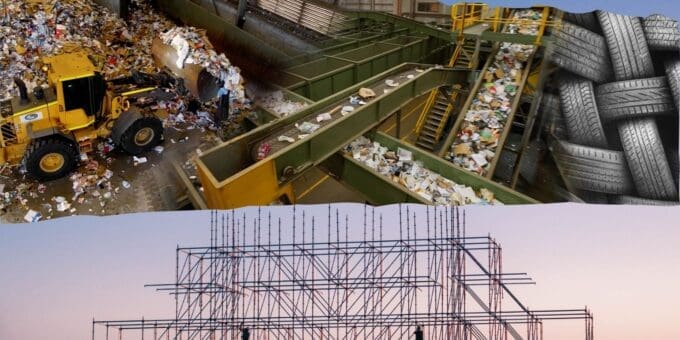
| Target Materials | Plastics, mixed/unsorted paper and cardboard, whole used tyres |
The Hard Eligibility Filter: Who Qualifies
✅ Must-Have Requirements
Applicant Status:
- You must be a regional or remote local government authority in Western Australia. Metropolitan councils are automatically excluded
- Private companies, community organisations, and non-LGA entities cannot apply
Project Specifications:
- Infrastructure must directly process materials subject to the national waste export ban (plastics, paper/cardboard, whole tyres)
- Projects must demonstrably increase recycling capacity, sorting capability, or processing viability
Timeline Compliance:
- Project must reach full operational status by 1 June 2027, including equipment commissioning, staff training, and active waste processing
- Delays beyond this date result in funding withdrawal
❌ Automatic Dealbreakers
Geographic Exclusions:
- Perth metropolitan area councils including Fremantle, Joondalup, Stirling, Swan, Canning, Cockburn, and adjacent LGAs are ineligible
Ineligible Waste Streams:
- Organic and food waste (covered under Food Waste for Healthy Soils Fund)
- Glass recycling infrastructure
- Hazardous materials or chemical waste
Ineligible Project Types:
- Waste collection vehicles or kerbside bin systems
- Landfill construction or expansion
- Ongoing operational costs including wages, rent, or utilities (capital infrastructure only)
The Application Killers: Non-Obvious Rejection Triggers
1. The Invoice Date Trap: Capital vs Operational Costs
Many councils mistakenly bundle ongoing staff wages, training programmes, or facility rent into grant budgets. The RMF funds capital infrastructure only, not operational costs.
Eligible: One-off purchases of recycling equipment (balers, shredders, sorting lines), construction of processing facilities, installation of permanent infrastructure
Ineligible: Staff salaries, annual maintenance contracts, utility bills, lease agreements, consumables, or recurring expenses
Real Example: A Pilbara council applied for $400,000 for tyre recycling infrastructure but included two full-time operator salaries for 18 months ($120,000). The application was rejected because wage costs exceeded 25% of the total budget, flagged as operational cost padding rather than genuine capital investment.
The Fix: Separate your budget into capital (one-time equipment) and operational (wages, ongoing costs). Submit only capital costs in your RMF application. Cover operational expenses through council budget or alternative funding.
2. The Completion Date Delusion
Councils confuse project completion with construction finish. The RMF requires full operational status by 1 June 2027, meaning active waste processing, not just built infrastructure.
By 1 June 2027, you must demonstrate:
- Equipment installed, tested, and commissioned
- All regulatory approvals obtained (environmental, planning, health)
- Staff trained with operational shifts running
- Waste materials actively processed with tonnage records
Real Example: A Mid-West council submitted an application with a completion date of 30 May 2027 for a cardboard baler. Site civil works alone required 14 weeks. When assessors applied realistic timelines for procurement (8 weeks), equipment delivery from overseas suppliers (16 weeks), installation (8 weeks), and commissioning with training (12 weeks), the project could not possibly be operational by deadline. The application was rejected as having an unrealistic timeline.
The Fix: Work backwards from 1 June 2027. Add a four-week buffer for unexpected delays. If procurement takes until August 2026 and equipment has a 20-week lead time, you are already at risk. Pre-purchase critical long-lead items or select suppliers with faster delivery.
3. The Waste Segregation Oversight
Councils propose projects processing general recyclables without clearly demonstrating they specifically target export-banned materials.
The Rule: Projects must demonstrably increase processing capacity for materials subject to the Australian Government waste export ban: plastics (PET, HDPE, PP, LDPE, PS, PVC), mixed and unsorted paper/cardboard, and whole used tyres.
Real Example: A Wheatbelt council applied for a $600K Materials Recovery Facility upgrade claiming it would improve recycling rates across all materials. The application described processing glass bottles, aluminium cans, paper, cardboard, and plastics. Assessors could not isolate RMF-eligible components (paper, cardboard, plastics) from ineligible materials (glass, metals). The application was rejected as insufficiently targeted.
The Fix: Clearly specify tonnage targets for each export-banned material. Example: The baler will process 240 tonnes per annum of mixed paper and cardboard currently sent to landfill. Avoid vague language like general waste improvement.
Step-by-Step Submission Guide
Phase 1: Pre-Application Preparation (4-6 Weeks)
Step 1: Confirm Your LGA Classification
Call DWER on 6364 7162 or 0481 061 311 to confirm your council’s regional/remote classification before investing time in an application. Not all non-metropolitan councils automatically qualify. The Department uses ABS Remoteness Structure classifications.
Step 2: Conduct a Waste Audit
Gather specific tonnage data: current annual volumes of plastics, paper/cardboard, and tyres sent to landfill; projected processing capacity of proposed infrastructure; cost per tonne for current disposal versus anticipated post-project processing costs.
Step 3: Obtain Supplier Quotes
Three written quotes are mandatory for equipment purchases over $10,000. Quotes must be dated within six months, include GST-exclusive pricing, specify delivery timeframes and installation requirements, and break down costs by component.
Step 4: Secure Council Resolution
Your application requires formal council resolution authorising the project and committing to co-funding any shortfall, ongoing operational costs post-completion, and compliance with grant conditions including quarterly reporting.
Phase 2: SmartyGrants Portal Application
Navigate to https://dwer-env.smartygrants.com.au/ and create an account using your official council email address. Personal emails will be flagged and rejected.
Critical Application Components:
- Applicant Details: Council name, ABN, physical address, primary contact officer, CEO authorisation
- Project Description (Most Critical 40% of Assessment): Specific infrastructure being purchased, target waste streams and annual tonnage volumes, geographic service area, key outcomes with measurable diversion targets
- Budget Breakdown: Equipment purchase, freight/delivery, site preparation, installation/commissioning, contingency (max 10%), total project cost, grant request, council co-contribution. All figures GST-exclusive
- Timeline and Milestones: Create Gantt chart with key dates: council resolution approval, equipment tender finalized, site works complete, equipment delivered, installation complete, staff training finished, full operational status (by 1 May 2027 with buffer)
- Risk Management: Identify 4-5 key risks with mitigation strategies (equipment delivery delays, site approval delays, insufficient waste volume, staff retention)
- Supporting Documents: Three equipment quotes, council resolution, site plan, letters of support from neighbouring councils, environmental approval, waste audit data
Insider Tactics to Strengthen Your Application
Tactic 1: Demonstrate Regional Collaboration
Applications servicing multiple shires receive priority scoring. Include signed Memorandums of Understanding from neighbouring councils. Example: This baler will process cardboard from Coolgardie, Kalgoorlie-Boulder, and Menzies shires under formalised waste supply agreements, servicing a combined population of 45,000 across 95,000 square kilometres.
Tactic 2: Quantify Landfill Diversion Metrics
Calculate return on investment: Current landfill disposal of 240 tonnes cardboard/year at $150/tonne equals $36,000 annual cost. Post-project: 240 tonnes baled and sold at $80/tonne generates $19,200 annual revenue. Net financial benefit of $55,200 per year plus diversion of 240 tonnes from landfill. Assessors prioritise applications with clear ROI calculations.
Tactic 3: Reference the National Export Ban
Reference policy context: This project directly responds to the Recycling and Waste Reduction Act 2020 export prohibitions on mixed plastics, enabling local processing of materials previously shipped offshore. This demonstrates understanding of the policy driving RMF.
Tactic 4: Highlight Indigenous Employment
If your project creates employment or training opportunities for Aboriginal and Torres Strait Islander people, mention this explicitly. The WA Government’s broader strategic priorities include Indigenous economic development, and assessors consider social co-benefits.
Tactic 5: Include Scalability Potential
Describe expansion capability: The facility design allows installation of a second baler when waste volumes increase, doubling processing capacity from 240 to 480 tonnes per annum without additional civil works. Forward-thinking applications demonstrating long-term strategic planning score higher than single-purpose projects.
Unsure of your eligibility? Check Your Eligibility
Frequently Asked Questions
Q: What is the maximum grant amount under the RMF WA Regional LGA stream?
A: The maximum is $1,000,000 (excluding GST) per project with a minimum of $50,000 (excluding GST).
Q: When does the application close?
A: Applications close at 4pm AWST on 27 February 2026 via SmartyGrants portal only. No paper, email, or postal applications accepted.
Q: What waste materials are eligible?
A: Materials subject to the Australian waste export ban: plastics (all polymer types), mixed and unsorted paper/cardboard, and whole used tyres. Glass, metals, organic waste, and e-waste are not eligible.
Q: Can metropolitan Perth councils apply?
A: No. The Regional and Remote LGA stream is exclusively for regional and remote local government authorities. Metropolitan councils are automatically excluded.
Q: Can we include GST in our grant request?
A: No. All grant amounts are GST-exclusive. Councils can claim GST back through ATO input tax credit mechanism.
Q: What if we cannot meet the 1 June 2027 deadline?
A: You must notify DWER immediately. Extensions are granted only in exceptional circumstances (natural disasters, global supply chain failures). Routine delays due to poor planning may result in funding withdrawal.
Q: Can we start the project before the grant agreement is signed?
A: You can undertake preparatory work (site surveys, planning approvals) at your own risk, but equipment purchases or construction before signed grant agreement may be ineligible for reimbursement. DWER strongly advises waiting for formal approval.
Q: How competitive is this funding round?
A: The 2023 general stream funded 14 projects from an estimated 30-40 applications (approximately 35-40% success rate). Regional LGA streams have similar funding constraints. A well-prepared application addressing all assessment criteria has approximately 50-60% approval probability.
Glossary of Key Terms
Capital Expenditure (CapEx): One-time costs for purchasing or constructing long-term assets like equipment and buildings. Eligible for RMF funding.
Operational Expenditure (OpEx): Ongoing costs for running a facility including wages, utilities, and maintenance. Not eligible for RMF funding.
Export-Banned Materials: Waste categories prohibited from export under the Recycling and Waste Reduction Act 2020: whole tyres (from December 2021), mixed plastics (from July 2022), mixed paper/cardboard (from June 2024).
Materials Recovery Facility (MRF): Specialized facility that receives, separates, and processes recyclable materials from municipal waste streams.
Polymer Types: Categories of plastics including PET (drink bottles), HDPE (milk bottles), PP (margarine containers), LDPE (plastic bags), PS (polystyrene), PVC (pipes).
SmartyGrants: Online grants management platform used by DWER for RMF applications. Applicants must create accounts and submit via this system only.
Your Next Steps to Secure RMF Funding
The Recycling Modernisation Fund represents a significant opportunity for regional Western Australian councils to transform waste management infrastructure with government co-funding. Success requires meticulous planning, realistic timelines, and clear demonstration of how your project addresses the national waste export ban.
Your 7-Day Action Plan:
- Days 1-2: Call DWER (6364 7162 or 0481 061 311) to confirm your LGA regional/remote classification. Conduct internal waste audit to establish baseline tonnage data
- Days 3-4: Research equipment suppliers and request three GST-exclusive quotes. Identify site preparation requirements
- Day 5: Draft project timeline working backwards from 1 June 2027 with four-week buffer
- Days 6-7: Prepare council resolution for February 2026 meeting authorising the RMF application, committing to co-funding, and acknowledging ongoing operational responsibilities
The 27 February 2026 deadline is firm. SmartyGrants portal closes at 4pm AWST with no extensions. Start your application immediately to avoid last-minute technical issues or missing documentation.