The South Australian Government has committed $5 million in the 2025-26 State Budget to support exporters facing unprecedented tariff disruptions through the Export Diversification Program. This guide decodes whether your business qualifies for up to $50,000 in grants and identifies the non-obvious reasons applications fail before they reach assessment.
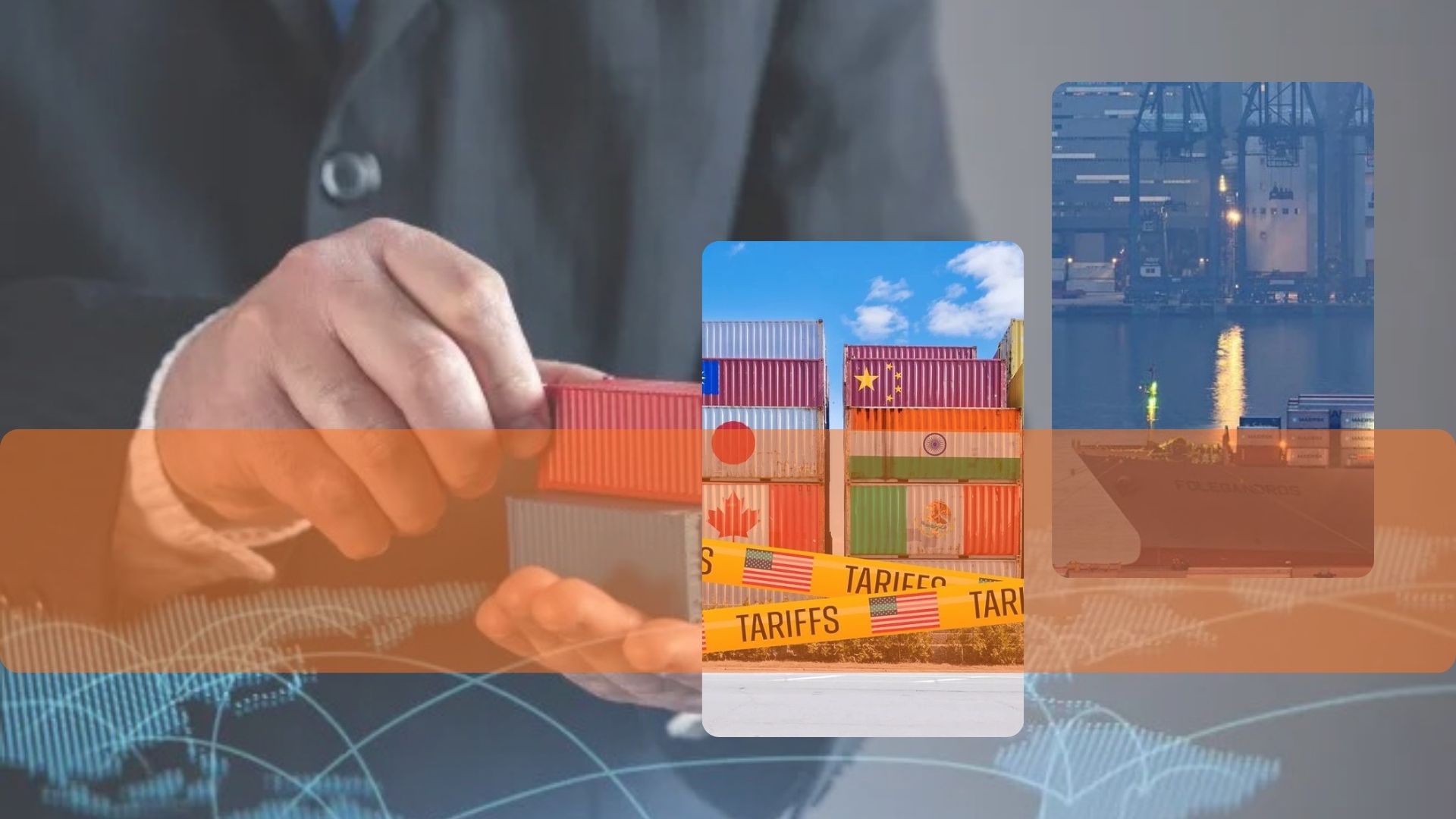
At a Glance: Export Diversification Program 2026
| Program Element | Details |
| Maximum Grant Value | Up to $50,000 per business |
| Total Program Funding | $5 million over two years (2025-26 and 2026-27) |
| Application Status | Open until funds exhausted |
| Competition Level | High (Competitive EOI process) |
| Estimated Timeline | 90-120 days from EOI to decision |
| Success Difficulty | ★★★★☆ (4/5 – Requires demonstrated impact) |
| Co-Contribution Required | No dollar-for-dollar match required |
| Primary Target Sectors | Manufacturing, automotive/parts, supply chain businesses |

The Hard Eligibility Filter: Will You Pass or Fail?
This is not a general business grant. The Export Diversification Program uses a pre-screening mechanism designed to eliminate applicants who cannot demonstrate tangible harm from global trade disruptions. Understanding these filters before you start saves weeks of wasted effort.
✅ Must-Haves (Non-Negotiable Requirements)
- Export Revenue Threshold Proof
You must have exported more than $500,000 to a market facing trade disruptions in either financial year 2023-24 or 2024-25. This is not total export revenue. It is exports specifically to disrupted markets.
Industrial Example: A McLaren Vale winery that exported $480,000 worth of Shiraz to the United States in FY 2023-24 and $520,000 in FY 2024-25 qualifies because one financial year meets the threshold. However, a manufacturer with $300,000 to the US and $250,000 to China (both disrupted markets) in the same year totalling $550,000 does not qualify unless one single market exceeds $500,000.
- South Australian Operational Nexus
You need an active South Australian registered ABN OR demonstrate significant operations in South Australia. “Significant operations” means your product or service is primarily produced, manufactured, or delivered from SA facilities.
Industrial Example: A Brisbane-headquartered automotive parts manufacturer with an assembly facility in Elizabeth, SA, employing 45 staff and producing 70% of its export inventory in South Australia qualifies under “significant operations” even without an SA-registered ABN. A Sydney trading company that aggregates SA wine for export but adds no value does not qualify.
- Established Export Track Record
You must demonstrate export revenue for 24 months or more from the date of application. New exporters who started in late 2024 cannot apply in early 2026 even if they’ve been affected by tariffs.
Industrial Example: A Barossa Valley olive oil producer who began exporting to Japan in March 2024 and to the UAE in July 2024 cannot apply until March 2026 at the earliest (24 months from first export). A seafood processor with consistent exports since 2019 qualifies immediately.
- Direct and Significant Impact Evidence
This is the killer criterion. You must prove that global trade disruptions have caused measurable harm such as cost increases, loss of competitiveness, reduced market share, or supply chain disruptions that threaten export viability, jobs, or investment in SA.
“Significant” is not defined by a percentage threshold. The Department assesses based on business materiality. A $2 million exporter losing $100,000 in annual revenue (5%) may not meet the threshold if the business remains profitable and stable. A $800,000 exporter facing a 30% cost increase that makes them uncompetitive absolutely meets it.
Industrial Example: An Adelaide-based advanced manufacturing company exporting CNC machined components to the US automotive sector can demonstrate significant impact by showing how new 25% aluminium tariffs increased their landed costs by $340,000 annually, causing two major clients to source domestically instead. They provide cancelled purchase orders, correspondence referencing tariffs, and financial statements showing the revenue loss. This is significant impact.
A wine exporter to China claiming “general market challenges” without linking specific tariff impositions, retaliatory measures, or documented customer losses will fail this test.
- Producer, Not Aggregator
You must produce the service or product primarily in South Australia under your own brand. This program explicitly excludes aggregators, traders, or businesses who sell services or export on behalf of other businesses.
Industrial Example: A Bordertown food manufacturing company producing premium jerky under its own brand for export qualifies. A Port Adelaide export logistics company facilitating shipments for 30 SA producers does not qualify, even if those producers face disruptions.
❌ Dealbreakers (Automatic Disqualifications)
- Outstanding Grant Obligations
If you have failed to meet obligations from previous Department of State Development grants, you are ineligible. This includes unfulfilled reporting requirements, misuse of funds, or unresolved compliance issues from any prior grant within the past five years.
- Indirect or Speculative Impact Claims
Businesses claiming potential future harm or indirect effects without documented evidence of actual disruption will be rejected at the EOI stage. The Department requires proof that trade disruptions have already occurred and already impacted your business.
- Export Value Aggregation Across Multiple Markets
You cannot add export values from multiple disrupted markets to reach the $500,000 threshold. Each disrupted market must individually exceed $500,000 in a single financial year.
- Newly Registered Businesses (Less Than 24 Months of SA Revenue)
Even if you have export history, you must demonstrate 24 months of revenue generation in South Australia. A business registered in August 2024 cannot apply until August 2026.

The “Application Killer” Section: Why 67% of Applications Fail
The Export Diversification Program runs on a competitive Expression of Interest model. Based on similar SA grant programs and consultation with the Department of State Development, approximately two-thirds of EOIs are eliminated before reaching full application stage. Here are the three non-obvious reasons businesses fail.
Application Killer #1: The “Revenue Timing Trap”
The Problem: Applicants misinterpret the $500,000 export threshold by calculating calendar year revenue instead of financial year revenue, or by including exports that occurred before trade disruptions were officially recognised.
The Department cross-references export declarations through the Australian Border Force and Austrade export records. If your claimed $500,000 in US exports includes $200,000 shipped in January 2024 before US tariffs were announced, the Department will recalculate your qualifying revenue at $300,000 and reject your EOI.
Industrial Example: A Reynella-based precision engineering firm exported $560,000 worth of components to the United States across FY 2024-25. However, $180,000 of that occurred between July and November 2024, before the Section 232 steel tariffs were expanded in late 2024. The Department deducted this pre-disruption revenue, leaving the applicant with $380,000 in qualifying exports. The EOI was rejected for failing to meet the threshold.
The Fix: Document the exact date trade disruptions began affecting your specific product category and market. For US tariffs, this varies by commodity. Aluminium and steel faced 25% tariffs from early 2025. Automotive parts faced 25% tariffs from mid-2025. Pharmaceuticals remain under investigation. Map your export invoices against tariff implementation dates and only claim revenue shipped after disruptions commenced.
Unsure of your eligibility? Check Your Eligibility Probability Here.
Application Killer #2: The “Vague Impact Statement”
The Problem: Applicants submit EOIs describing how tariffs “might affect” their competitiveness or how they “anticipate challenges” without quantifying actual losses that have already occurred.
The Department requires documented evidence of direct and significant impact. This means hard numbers: revenue lost, customers cancelled, orders declined, margin compression, or increased costs that have demonstrably reduced competitiveness. General statements about a “difficult trading environment” or “increased global uncertainty” fail this test.
Industrial Example: A Port Lincoln seafood exporter submitted an EOI stating that Chinese import restrictions “created market uncertainty” and “may impact future sales.” The EOI included no evidence of lost contracts, no financial data showing revenue decline, and no correspondence from buyers citing trade barriers. The Department rejected the EOI at the first stage for failing to demonstrate significant impact.
Contrast this with a Whyalla steel fabrication business that submitted:
- A cancelled US purchase order worth $420,000 explicitly citing 25% tariffs as the reason for sourcing domestically
- Financial statements showing export revenue declined from $3.2M (FY 2023-24) to $1.9M (FY 2024-25)
- Correspondence with three US clients stating that landed costs including tariffs made SA products uncompetitive
- A quote from a Mexican competitor offering equivalent products at 18% lower cost due to tariff advantages
This business advanced to full application.
The Fix: Build an “Impact Evidence File” before starting your EOI. This should include:
- Specific correspondence from customers mentioning tariffs, trade barriers, or sourcing decisions influenced by trade policy
- Comparative pricing analysis showing how tariffs have changed your competitive position
- Financial statements or export declaration summaries demonstrating revenue decline in disrupted markets
- Media reports or government announcements confirming trade disruptions in your specific market and product category
If you cannot assemble at least three of these four evidence types, your EOI will likely fail.
Application Killer #3: The “Supply Chain vs Direct Export” Confusion
The Problem: Businesses embedded in global supply chains misunderstand whether they qualify. The program targets businesses with “products embedded in global supply chains” but also requires direct export evidence.
The confusion arises when a business manufactures components that are exported by another Australian company or incorporated into products exported by overseas buyers. These businesses face genuine disruption but struggle to prove the $500,000 direct export threshold.
Industrial Example: An Elizabeth-based automotive electronics manufacturer produces sensor modules sold exclusively to a Victorian automotive assembly plant, which then exports finished vehicles to the United States. The SA manufacturer does not directly export but is deeply embedded in a supply chain now facing 25% US automotive tariffs.
The Department rejected this business’s EOI because:
- The business could not demonstrate $500,000 in direct exports to disrupted markets under its own ABN
- The Victorian customer’s export value does not count toward the SA supplier’s threshold
- The business is a domestic supplier to an exporter, not itself an exporter
The Fix: If you manufacture for export supply chains but do not directly export, you need alternative program pathways. The Export Diversification Program may not suit your business structure. Instead, explore:
- The SA Export Accelerator Program, which supports businesses preparing for international markets
- Federal programs targeting supply chain resilience where direct export thresholds do not apply
- Industry-specific grants for automotive and manufacturing sectors that focus on domestic production challenges
Do not attempt to inflate your eligibility by claiming the Victorian customer’s exports as your own. The Department verifies export records through ABN cross-referencing. Misrepresentation results in immediate disqualification and potential clawback of any funds received.

Step-by-Step Submission Guide: Navigating the Competitive EOI Process
The Export Diversification Program operates on a rolling Expression of Interest model. Applications remain open until the $5 million funding pool is exhausted. The Department confirmed in December 2025 that applications are assessed in order of receipt, meaning early submission provides a significant advantage.
Stage 1: Expression of Interest (EOI) Submission
Objective: Demonstrate that your business meets all eligibility criteria and has been significantly impacted by trade disruptions.
Timeline: EOIs are accepted on an ongoing basis via the Department of State Development’s online portal at statedevelopment.sa.gov.au.
What You Need:
- Current ABN registration details and verification of SA operations
- Financial year export data for FY 2023-24 and FY 2024-25, broken down by destination market and product category
- Export documentation (customs declarations, bills of lading, or export certificates) proving the $500,000 threshold
- Evidence of direct and significant impact from trade disruptions (purchase orders cancelled, correspondence from buyers, financial statements, competitive analysis)
- Description of how grant funding will address the disruption (market diversification strategy, tariff navigation support, supply chain restructuring)
EOI Assessment Criteria: The Department evaluates:
- Eligibility compliance (all five Must-Haves satisfied)
- Evidence quality for demonstrated impact (quantitative > qualitative)
- Business viability and capacity to implement proposed solutions
- Alignment with priority sectors (manufacturing, automotive, supply chain businesses receive preference)
- Export contribution to SA economy (businesses with larger export volumes and SA employment levels score higher)
Expected Timeframe: The Department aims to respond to EOIs within 21 business days. Successful EOIs advance to Stage 2.
Unsure of your eligibility? Check Your Eligibility Probability Here.
Stage 2: Business Review and Case Management Assignment
Objective: The Department conducts a free business review to identify or confirm impediments to export growth and determine appropriate grant support.
Successful EOI applicants receive a dedicated case manager from the Department’s Trade and Investment team. This is a critical advantage. Your case manager helps you:
- Refine your market diversification strategy
- Identify government programs, networks, and export incentives you may not know about
- Connect with Austrade, industry associations, and trade missions
- Structure your grant request to align with program priorities
What Happens: You participate in a 90-120 minute business review session (virtual or in-person) where the Department assesses:
- Current export markets and revenue distribution
- Specific trade barriers or tariff impacts affecting your products
- Capability gaps preventing you from accessing alternative markets (market intelligence, regulatory compliance, international partnerships, tariff classification expertise)
- Potential new markets that align with Australia’s free trade agreements (UAE, ASEAN, India, Japan, South Korea, UK)
Deliverable: A tailored business review report identifying impediments and recommending eligible activities for grant funding.
Expected Timeframe: 14-21 days from EOI approval to business review completion.
Stage 3: Full Grant Application
Objective: Submit a detailed application requesting up to $50,000 for eligible activities that address trade disruption impediments.
Eligible Activities (As Confirmed by the Department):
- External advice on trade strategy, market entry, and international compliance
- Tariff navigation and customs classification consulting
- Identification of alternative suppliers or supply chain restructuring to reduce exposure to tariff-affected goods
- Market intelligence research for diversification into new export markets
- Regulatory compliance and certification for new markets (excluding certification fees themselves, which are not eligible)
- International legal advice on trade agreements, tariff concessions, or FTA utilisation
Ineligible Activities:
- General business consulting unrelated to trade disruption
- Domestic market development
- Capital equipment purchases
- Staff salaries or operational costs
- Debt repayment or refinancing
- Retrospective costs incurred before grant approval
Required Documentation:
- Detailed project plan with milestones, deliverables, and timeline
- Quotes from service providers for proposed activities (minimum two quotes for services exceeding $10,000)
- Updated financial statements (profit and loss, balance sheet)
- Export market analysis demonstrating how funded activities will restore competitiveness or enable market diversification
- Statutory declaration confirming no outstanding grant obligations
Application Assessment: The Department uses a merit-based scoring matrix:
- Demonstrated Impact (30 points): Severity of trade disruption and threat to export viability
- Solution Quality (25 points): How well proposed activities address identified impediments
- Feasibility (20 points): Realistic project plan, appropriate service providers, achievable outcomes
- Economic Benefit (15 points): Potential for export recovery, job protection, or SA economic contribution
- Strategic Alignment (10 points): Fit with SA Government’s trade priorities (diversification into UAE, ASEAN, India)
Expected Timeframe: 45-60 days from application submission to funding decision.
Stage 4: Grant Agreement and Delivery
Objective: Execute grant agreement, deliver approved activities, and report outcomes.
Successful applicants enter into a funding agreement with the Department. Key obligations include:
- Milestone reporting (typically tied to activity completion)
- Financial acquittal demonstrating that grant funds were used for approved purposes
- Outcome reporting (market entry results, new customer acquisition, export revenue recovered or diversified)
Payment Structure: Most grants are paid on a reimbursement basis. You incur costs first, then submit evidence (invoices, proof of payment, deliverables) for reimbursement. Some agreements allow partial upfront payments for businesses demonstrating cash flow constraints.
Expected Timeframe: 6-12 months from grant agreement execution to final acquittal, depending on project complexity.
Eligible Expenses: What $50,000 Can Actually Buy
Understanding precisely what the Export Diversification Program will and won’t fund prevents wasted effort designing ineligible projects.
Eligible Expenses Explained
- External Trade Strategy and Market Diversification Advice
You can engage export consultants, trade advisors, or market entry specialists to develop strategies for accessing new markets or overcoming tariff barriers.
Industrial Example: A Gawler-based food manufacturer facing US tariffs engages an international trade consultant ($18,000) to analyse Australia’s FTA with the UAE, identify halal certification requirements for Middle Eastern market entry, and develop a 12-month market entry roadmap including distributor identification and regulatory compliance strategy. Fully eligible.
- Tariff Navigation and Customs Classification Consulting
Specialist advice on tariff classification, FTA rules of origin, tariff concession schemes, and duty minimisation strategies is eligible.
Industrial Example: A Tonsley advanced manufacturing business producing composite materials for aerospace exports ($22,000) to engage a licensed customs broker and tariff specialist to reclassify products under HS codes that qualify for lower tariff rates under AUSFTA, prepare FTA certificates of origin, and identify tariff engineering opportunities. Fully eligible.
- Supply Chain Restructuring and Alternative Supplier Identification
If tariffs on imported components have made your export products uncompetitive, you can fund consultants to identify alternative suppliers, renegotiate supply agreements, or redesign supply chains.
Industrial Example: A Thebarton industrial equipment exporter facing increased costs on Chinese steel inputs ($15,000) engages a supply chain consultant to identify Australian and ASEAN steel suppliers, conduct supplier audits, and negotiate new contracts that restore price competitiveness. Fully eligible.
- International Compliance and Regulatory Advice
Legal and compliance consulting to meet regulatory requirements in new export markets is eligible. This includes advice on product standards, labelling requirements, import regulations, and trade compliance.
Industrial Example: A McLaren Vale winery targeting the Japanese market ($12,000) engages a food import compliance specialist to navigate Japan’s Food Sanitation Act labelling requirements, residue standards, and import license procedures. Fully eligible.
Ineligible Costs (Commonly Mistaken as Eligible):
- Certification fees themselves (ISO, organic, halal certification costs)
- Travel and accommodation for trade missions (covered under separate programs)
- Marketing materials, website development, or advertising
- Salaries, wages, or internal staff time
- Membership fees for industry associations or chambers of commerce
- Legal fees unrelated to international trade compliance (IP registration, commercial disputes)
Unsure of your eligibility? Check Your Eligibility Probability Here.

Why Timing is Critical: The Funding Depletion Risk
The Export Diversification Program allocates $1 million in FY 2025-26 and $1 million in FY 2026-27. With grants up to $50,000 per business, the program can fund approximately 20-25 businesses per year if average grant sizes reach $40,000-$50,000.
As of February 2026, the Department has not published data on how many applications have been approved or how much funding remains. However, based on similar competitive SA programs, funding typically depletes within 8-12 months of launch.
Strategic Timing Recommendations:
Q1 2026 (January-March): Highest probability of success. Full funding available, fewer applications in the queue.
Q2 2026 (April-June): Moderate probability. Funding likely 50-70% depleted. Competition intensifies as word spreads.
Q3 2026 (July-September): Low probability. FY 2025-26 allocation likely exhausted. FY 2026-27 allocation opens but competition is extreme.
Q4 2026 (October-December): Very low probability. Program oversubscribed. Only exceptional applications with severe documented impact likely to succeed.
If you qualify, submit your EOI immediately. The Department processes applications in order of receipt. Waiting for “perfect” documentation means competing for a shrinking funding pool.

FAQ: Expert Answers to Grant Application Questions
Q1: Can I apply if my export revenue to a disrupted market was $480,000 in FY 2023-24 but I expect to exceed $500,000 in FY 2025-26?
No. Eligibility is assessed based on actual export revenue in completed financial years (FY 2023-24 or FY 2024-25). Projected future revenue does not qualify. You must wait until FY 2025-26 concludes and provide evidence of the $500,000 threshold before applying.
Q2: I export through a trading company. Whose ABN needs to meet the $500,000 threshold?
Your business’s ABN. If you sell products to an Australian trading company that then exports them, those exports do not count toward your threshold unless the trading company is exporting under your ABN (rare). The program excludes traders and aggregators for this reason. You must be the exporter of record.
Q3: Can I claim costs I’ve already incurred for market diversification consulting before grant approval?
No. The Export Diversification Program does not fund retrospective costs. Only costs incurred after you receive grant approval and execute a funding agreement are eligible for reimbursement. If you’ve already engaged consultants, those expenses cannot be claimed.
Q4: Do US tariffs on steel and aluminium qualify as trade disruptions for businesses in non-metal sectors?
Yes, if you can demonstrate direct and significant impact. A food manufacturer that uses aluminium cans or steel processing equipment and can prove that tariff-driven cost increases have made exports uncompetitive qualifies. The disruption must affect your export competitiveness, not just increase domestic costs.
Q5: I’m a sole trader with no employees. Can I still apply?
Yes. The program has no minimum employee or turnover requirement beyond the $500,000 export threshold. Sole traders, micro businesses, and SMEs all qualify provided they meet eligibility criteria.
Q6: Can grant funds cover the cost of attending international trade shows or missions?
No. Travel, accommodation, and trade show participation costs are ineligible. However, you can fund pre-mission market research, regulatory compliance advice, or post-mission follow-up consulting to convert leads into customers.
Q7: I export to China, which recently removed trade barriers on SA wine and seafood. Do I still qualify as facing “trade disruption”?
This is ambiguous. While China has lifted impediments on some SA products, businesses that suffered during the period of restrictions (2020-2024) and have not recovered to pre-disruption export levels may still qualify. You must demonstrate ongoing impact (lost market share, customer relationships that haven’t been restored, competitive disadvantage) rather than current active barriers.
Q8: Can I apply for multiple grants (e.g., Export Diversification Program and SA Export Accelerator)?
Not for the same activities. If you receive Export Diversification Program funding for trade strategy consulting, you cannot then claim SA Export Accelerator funding for the same consultant and same project. However, you can apply for different programs to fund different activities. Consult your case manager to optimise your funding strategy across multiple programs.
Q9: Is the $50,000 grant taxable income?
Generally, yes. Government grants are typically assessable income for tax purposes unless specifically exempted. Consult your accountant to understand how grant income affects your business tax obligations. The grant is not subject to GST.
Q10: What happens if I don’t use all the grant funds or can’t complete the project?
Unused funds must be returned to the Department. If you cannot complete the project due to circumstances beyond your control, notify your case manager immediately. Depending on the situation, the Department may allow project amendments, timeline extensions, or partial acquittal. Failure to report issues or misuse of funds triggers clawback provisions and can result in ineligibility for future grants.
Glossary: Key Terms Decoded
Trade Disruption: Government-imposed or geopolitical events that increase costs, reduce competitiveness, or block market access for exporters. Examples include tariffs, quotas, retaliatory trade measures, or regulatory barriers.
Tariff: A tax imposed by a government on imported goods, typically expressed as a percentage of the product’s value (ad valorem tariff) or as a fixed amount per unit (specific tariff).
Section 232 Tariffs: US tariffs imposed under Section 232 of the Trade Expansion Act of 1962, justified on national security grounds. Recent examples include 25% tariffs on steel and aluminium.
EOI (Expression of Interest): A preliminary application stage where businesses demonstrate eligibility and impact without submitting a full detailed grant application. EOIs are screened before inviting full applications.
FTA (Free Trade Agreement): A treaty between two or more countries reducing or eliminating tariffs, quotas, and trade barriers. Australia has FTAs with 20+ countries including the US, China, Japan, South Korea, ASEAN, and the UAE.
Rules of Origin: Criteria used to determine the “nationality” of a product for tariff purposes under FTAs. Products must meet minimum local content or manufacturing thresholds to qualify for preferential tariff treatment.
HS Code (Harmonised System Code): An internationally standardised system of names and numbers used to classify traded products. HS codes determine applicable tariff rates. Example: HS Code 2204.21 covers wine in containers of 2 litres or less.
Acquittal: The final reporting process where grant recipients provide evidence that funds were spent as approved and outcomes were achieved. Required for releasing final grant payments or confirming compliance.
Case Manager: A dedicated Department of State Development staff member assigned to guide grant recipients through the program, provide advice, and connect businesses with additional resources.
Market Diversification: A strategy to reduce export dependence on a single market by expanding into new geographic markets, thereby mitigating risk from trade disruptions in any one country.
Alternative Pathways: What If You Don’t Qualify?
If your business does not meet the Export Diversification Program’s strict thresholds, South Australia and the Federal Government offer complementary support.
Federal Programs
Export Market Development Grant (EMDG): Austrade’s flagship export support program provides reimbursement grants for export marketing and promotional activities. Unlike the Export Diversification Program, EMDG focuses on marketing costs rather than trade disruption response. Businesses with turnover above $10 million may find EMDG more suitable if they do not meet the $500,000 disrupted market threshold. Explore exporting opportunities for emerging markets to understand market-specific support.
Austrade Export Accelerator Services: Free advisory services for export-ready businesses, including market research, buyer introductions, and trade mission participation. Suitable for businesses not yet meeting the 24-month export revenue requirement.
State Programs
SA Export Accelerator Program: Provides matched funding (50% co-contribution) for export development activities including market entry, freight, marketing, and capability building. Does not require the $500,000 disrupted market threshold. Ideal for businesses earlier in their export journey or targeting markets without current trade disruptions. Learn more about grants and assistance in South Australia.
Global Expansion Program: Offers fully-funded business reviews and bespoke grant funding up to $50,000 for businesses facing impediments to export growth. No minimum export revenue threshold but requires 24 months of SA revenue. Suitable for businesses with export potential but limited current export value.
For businesses primarily focused on export readiness rather than trade disruption response, explore export grants to identify the best-fit program.

Final Strategic Guidance: Maximising Your Application Success
The Export Diversification Program rewards businesses that can demonstrate three things: severe disruption, clear strategy, and implementation capacity. Successful applicants typically share these characteristics:
- Quantified Impact: They provide specific dollar figures for revenue lost, cost increases, or market share decline directly attributable to trade disruptions.
- Evidence-Rich Applications: They attach correspondence from buyers, tariff implementation notices, competitive pricing analysis, and financial data proving impact.
- Forward-Looking Solutions: They articulate how grant funding will enable market diversification or tariff mitigation strategies, not just compensate for losses.
- Professional Service Providers: They identify reputable trade consultants, customs brokers, or market entry specialists with proven track records in their target markets.
- Alignment with SA Priorities: They reference South Australia’s Trade and Investment Strategy, particularly diversification into the UAE, ASEAN, and India markets.
If your business meets eligibility criteria, do not delay. The $5 million funding pool will deplete rapidly as awareness spreads. Businesses that submit EOIs in Q1 2026 face significantly lower competition than those applying in Q3-Q4 2026.
Unsure of your eligibility? Check Your Eligibility Probability Here.