EXECUTIVE SUMMARY (Google AI Overview Block)
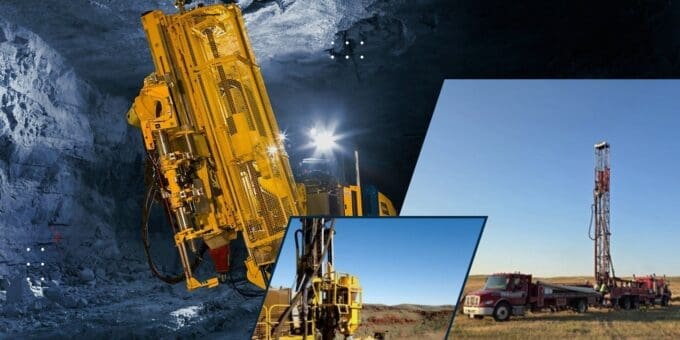
The Tasmanian Exploration Drilling Grant Initiative (EDGI) Round 12 is now open, offering mining and exploration licence holders up to $100,000 in co-funded drilling costs, plus an additional $20,000 for helicopter support, to stimulate greenfields mineral exploration across Tasmania. Projects must be completed by November 2027.
EDGI Round 12 At a Glance
| Detail | Information |
| Grant Value | Up to $100,000 (drilling) + $20,000 (helicopter support) |
| Program Status | OPEN — Closes 2pm, 26 March 2026 |
| Application Difficulty | Medium-High (competitive, merit-based) |
| Co-Funding Requirement | 50/50 cost-share (grant covers up to 50% of direct drilling costs) |
| Administered By | Mineral Resources Tasmania (MRT), Dept. of State Growth |
| Who Can Apply | Holders of Exploration Licences, Special Exploration Licences, Retention Licences, or Mining Leases in Tasmania |
| Project Completion Deadline | 12 November 2027 |
| Funding Agreement End | 10 December 2027 |
| Results Announced | Week starting 11 May 2026 |
| Application Portal | SmartyGrants (web-based, mobile-friendly) |
The Exploration Drilling Grant Initiative is one of the most direct, industry-targeted grant programs operating in Australia today. Unlike broad-based business grants, EDGI was designed specifically to de-risk the exploration phase of the mining cycle, the stage where capital is spent, results are uncertain, and many junior explorers simply run out of runway before they strike anything meaningful.
For Round 12, the Tasmanian State Government has significantly increased the funding cap. Where previous rounds capped government co-contribution at $70,000 for drilling costs, Round 12 lifts that ceiling to $100,000, a 43% increase. Add the helicopter support allowance of $20,000 and you are looking at a potential government contribution of $120,000 per successful project. Since the program launched in 2018, 110 grants have been awarded across eleven rounds. This is a proven, mature program and the competition is real.
The strategic logic behind EDGI is clear: Tasmania is positioned to become a critical minerals powerhouse. The 2024 Australian Critical Minerals list identifies dozens of commodities, from cobalt and lithium to rare earth elements, that are essential to Australia’s energy transition and defence supply chains. MRT is actively incentivising explorers to chase these targets in Tasmanian greenfields, and Round 12 has elevated critical minerals targeting to a key technical selection criterion.
If you hold a licence or lease over Tasmanian ground that has potential for these commodities, and you have planned drilling that could progress that story, this grant was built for operators like you. The question is not whether the grant is worth pursuing. The question is whether your proposal is built to win. Read on.
Unsure of your eligibility? Check Your Eligibility Probability Here.

The “Hard” Eligibility Filter: Will You Qualify?
Before you invest hours building a proposal, run yourself through this pre-screening checklist. This is the exact filter MRT will apply before your application is even considered by the assessment panel.
Must-Haves to Proceed
✅ You must hold an active Exploration Licence (EL), Special Exploration Licence (SEL), Retention Licence (RL), or Mining Lease (ML) in Tasmania that covers the proposed project area. Joint venture arrangements are accepted provided a Written Instrument is lodged with MRT. Note: If you hold an Exploration Licence Application where a recommendation to grant has been made to the Minister, consideration will be given , but only where the licence is expected to be granted within a reasonable timeframe. This is a conditional pathway, not a guaranteed one.
✅ You must have an active Australian Business Number (ABN) and be registered for tax purposes in Australia.There are no exceptions to this requirement. Offshore entities without Australian registration cannot participate.
✅ If you are a natural person (individual), you must be aged 18 years or over. The applicant does not have to be a natural person , companies, trusts, joint ventures and other structures are all eligible, provided the tenement is held in the applicant entity’s name or a proper assignment relationship is documented.
✅ Your proposed drilling must be true greenfields or near-greenfields exploration. The assessment panel gives higher weighting to projects in poorly explored areas. If your proposal is in a well-defined brownfields setting, it will be scored lower. If it is resource definition, appraisal or development drilling, it is categorically ineligible.
✅ Your project must be capable of completion and final report submission to MRT by 5:00pm on 12 November 2027. Given the extended timeline in Round 12 , introduced in recognition of drill rig availability constraints , this is a realistic window. But if your project has unresolved access issues, permitting delays, or rig sourcing uncertainty, these risks must be disclosed in your proposal and managed convincingly.
✅ You must be prepared to release all drilling results, data, and drill core to Open File after a confidentiality period of no more than six months from receipt of your Final Report. This is non-negotiable. EDGI is a public co-investment program. The State Government’s return on investment is geological knowledge contributed to Tasmania’s open data repositories.
Dealbreakers — Stop Here if Any of These Apply
❌ Your drilling is resource definition, appraisal or development drilling. This is explicitly excluded. If your holes are designed to build a JORC resource, extend a known deposit along strike at shallow depth, or support a feasibility study, EDGI will not fund it. The program funds discovery-oriented drilling, not de-risking of already-defined mineralisation.
❌ You split one project across multiple proposals using artificial boundaries. The guidelines are direct: all drill holes for a single prospect or target must be in one proposal. Applicants who attempt to game the per-project funding cap by fragmenting a single programme into multiple submissions risk disqualification of all proposals.
❌ Your project area extends outside Tasmania. This is a state-government program funded for Tasmanian exploration. Cross-border projects are not eligible.
❌ You cannot demonstrate compliance with your current licence or lease conditions. Section 9.6 of the assessment criteria explicitly scores your performance history, including expenditure commitments, work programme compliance, environmental conditions, and compliance with previous EDGI grants. If you have unresolved compliance issues with MRT, address them before submitting.
❌ Your application is received after 2:00pm on 26 March 2026. No late applications are accepted. No exceptions. The SmartyGrants portal closes automatically at the deadline.
The Application Killers: 3 Non-Obvious Reasons Proposals Fail
Passing the eligibility filter is the minimum standard. EDGI is a competitive, merit-based program, in previous rounds, not every eligible applicant received funding. Here are the three most commonly overlooked reasons technically eligible proposals are ranked too low to receive funding.
1. The “Near-Mine Creep” Trap
This is the most common silent killer of EDGI applications, and it is entirely avoidable. The assessment panel gives a higher weighting to proposals that are clearly greenfields and a lower weighting to those that are “clearly near-mine exploration.” The problem is that many applicants genuinely believe their project is greenfields, because the specific target has not been drilled, without recognising that the geological setting, proximity to existing resources, or the nature of the geophysical targets they are drilling all signal brownfields thinking to an experienced assessment panel.
Consider a junior explorer on a Tasmanian west coast licence targeting a geophysical anomaly 1.5 kilometres along strike from a known copper-gold system. The target is undrilled. The explorer sees it as greenfields. The MRT panel sees it as near-mine. The proposal is ranked lower than an applicant targeting a conceptual model in a structurally underexplored terrane 50 kilometres from any known mineralisation.
The fix: In Part 5 of your application (Project Rationale), be explicit about the exploration maturity of your target area. Document the limited prior drilling in the area, the knowledge gaps you are addressing, and how your work adds to geological knowledge at a terrane scale, not just a deposit scale.
2. The “Missing GST Calculation” Invoice Trap
This one is administrative, but it kills grant payments, not grant approvals. EDGI funding is provided GST exclusive. What this means in practice is that if you are awarded a $100,000 drilling grant and you are GST-registered, your invoice to MRT will be $100,000 plus 10% GST, for a total invoice of $110,000. The full $110,000 is paid to you, but $10,000 is remitted to the ATO as GST.
Where applicants get caught is in the acquittal stage. Your drilling contractor’s invoices to you are the basis of your grant payment. If those invoices are exclusive of GST (because your contractor is GST-registered and you claim the Input Tax Credit), your project costs for grant calculation purposes are the ex-GST amounts. If you include GST in your drilling cost estimate when you are entitled to claim an Input Tax Credit, you are over-stating your project cost and inflating your grant request, and the panel may downgrade your proposal’s financial accuracy.
The fix: Before submitting your cost estimate in Part 4 of the application, confirm with your drilling contractor whether their invoices will include or exclude GST, and confirm your own GST registration status. Cost estimates must be GST-exclusive where you are entitled to claim an Input Tax Credit.
3. The “Incomplete Documentation” Scoring Collapse
EDGI’s assessment criteria include a documentation quality score (Section 9.1) that carries real weight in the panel’s ranking. Proposals that are missing geological plans, lack predictive cross-sections showing drill hole traces, or fail to include suitably annotated supporting maps score below the threshold for funding, regardless of how geologically compelling the target might be.
This is particularly painful for junior explorers who have excellent geological thinking but limited resources for GIS and technical drafting. The panel expects to see a suitably annotated geological plan, a predictive cross-section showing drill hole traces, and clearly labelled images that can be printed or copied without loss of legibility. Poorly formatted or unlabelled images, or proposals that reference maps without attaching them, are a common reason otherwise-strong proposals lose ranking points.
The fix: Allocate specific time and budget to proposal graphics before your lodgement date. All supporting plans must be in PDF or JPG format. Drill hole location files can be in MS Excel or MapInfo formats. Upload everything before clicking submit, there is no opportunity to add documents after lodgement.
Unsure of your eligibility? Check Your Eligibility Probability Here.
What Costs Does EDGI Actually Fund?
Understanding exactly what is, and is not, a fundable cost is essential for building an accurate budget in your proposal. EDGI grant funding may only be applied to the following items:
Eligible Costs:
- Direct drilling costs (as invoiced by your drilling contractor for completing the hole)
- Drill sample assays
- Spectral measurements of drill samples
- Down-hole geophysical logging
- Helicopter mobilisation and support costs (where a remote location or environmental sensitivities require it, up to $20,000)
Explicitly Excluded Costs — These Will Not Be Funded:
- Mobilisation and demobilisation of the drill rig
- Access and drill site preparation
- Field staff costs
- Supervising geology costs
- Driller’s accommodation, meals, or toilet facilities
This exclusion list catches many first-time applicants by surprise. A drilling contractor’s invoice commonly bundles rig mobilisation, camp establishment, and site preparation alongside the per-metre drilling rate. You must itemise these costs separately and exclude them from your grant calculation. Only the direct drilling component, the contractor’s invoiced costs for actually completing the hole, counts toward your eligible cost base.
For explorers working in remote Tasmanian terrain where helicopter access is the only viable option for rig mobilisation, the $20,000 helicopter allowance is a meaningful addition. But it must be clearly justified in your application. The guidelines require that helicopter support is necessary because of remote location or environmental sensitivities, not simply because it is more convenient than a road build.
If you need guidance on structuring your eligible project costs alongside a broader financing strategy, the resources at government business loans and financing options can provide useful context for building your co-contribution model.
Step-by-Step Submission Guide: How to Lodge Your EDGI Round 12 Application
The application is lodged via SmartyGrants, the Department of State Growth’s online grants management platform. Here is the exact process, step by step.
Step 1: Register on SmartyGrants Navigate to the EDGI Round 12 application portal. Register your details to receive a password by email. Your application is stored online and can be saved and returned to at any time before the 2pm, 26 March 2026 deadline. Use this functionality, do not attempt to complete the application in a single sitting.
Step 2: Complete Part 1 — Eligibility Check The first section of the form asks you to acknowledge your eligibility. This is a declaration, not a checklist. Ensure all eligibility criteria are met before you tick this section. Providing false or misleading information can result in grant funds being clawed back.
Step 3: Complete Part 2 — Applicant Details Include all current company contact details. If you are a listed company, ensure the Registered Office matches what you have provided to the relevant stock exchange. If you are not the registered tenement holder, clearly document the relationship, whether that is a joint venture, farm-out, or assignment arrangement.
Step 4: Complete Part 3 — Location and Timing Note the commodities being targeted, list all tenement numbers and their holders, and provide a realistic estimate of project start date and duration. Timelines must be achievable within the November 2027 completion deadline. Overoptimistic timelines are flagged by the panel.
Step 5: Complete Part 4 — Summary Drilling Programme This is your budget section. List all key cost components, itemised exactly as described in the guidelines. Specify your total project cost and the amount of funding sought. Remember: maximum $100,000 for drilling costs, plus up to $20,000 for helicopter support, only where applicable.
Step 6: Complete Part 5 — Project Rationale (Your Most Critical Section) This is where your proposal wins or loses. You need to address four sub-elements: the summary project description (highlight critical mineral potential and greenfields nature explicitly), the exploration model and geological context (with supporting maps and cross-sections), a review of previous work, and the details of your proposed drilling programme including MGA94 collar coordinates, orientation, and proposed depth.
Step 7: Complete Part 6 — Project Management Summarise the likely environmental effects of your drill programme, your rehabilitation plan and timing, and a risk management section. Rig availability, site access, tenement approvals, and funding risks should all be addressed here. The panel is experienced, vague or dismissive risk sections reduce confidence in your ability to deliver.
Step 8: Complete Part 7 — Stakeholder Engagement If your drilling requires access to private property, document the progress of your landowner engagement. Proposals with unresolved access issues are higher-risk and may be ranked accordingly.
Step 9: Upload All Supporting Materials Attach all geological plans, cross-sections, and diagrams in PDF or JPG format. Attach drill hole location files in MS Excel or MapInfo format. Check that all images are legible and clearly labelled. Reference every attachment within the application form so the panel knows where to look.
Step 10: Review, Then Submit There is no opportunity to amend your application or add information after submission. Read every section. Check every attachment. When you submit, you will receive an automatic receipt with a unique application ID, keep this for your records.
For explorers who are newer to the grant application process, our guide to business growth programs and government funding provides helpful context on how merit-based competitive grants are assessed.
Unsure of your eligibility? Check Your Eligibility Probability Here.

After You Win: Reporting, Core Submission and Grant Payment
Securing an EDGI grant is not the end of your obligations, it is the beginning of a formal government funding relationship governed by a Grant Deed. Understanding your post-award obligations before you apply will prevent costly surprises.
Once notified of success in the week of 11 May 2026, you will receive a draft Grant Deed from the Department of State Growth. You have 14 days to review and respond to the draft. Within 10 days of agreement, two executed copies are forwarded to you for signing and return to MRT.
Before drilling begins, any proposed changes to your programme must be reported to MRT. Major programme changes require re-assessment by the panel. This is not a technicality, if you discover that the target requires a different drilling method, or you shift a collar location materially, you must seek approval before proceeding.
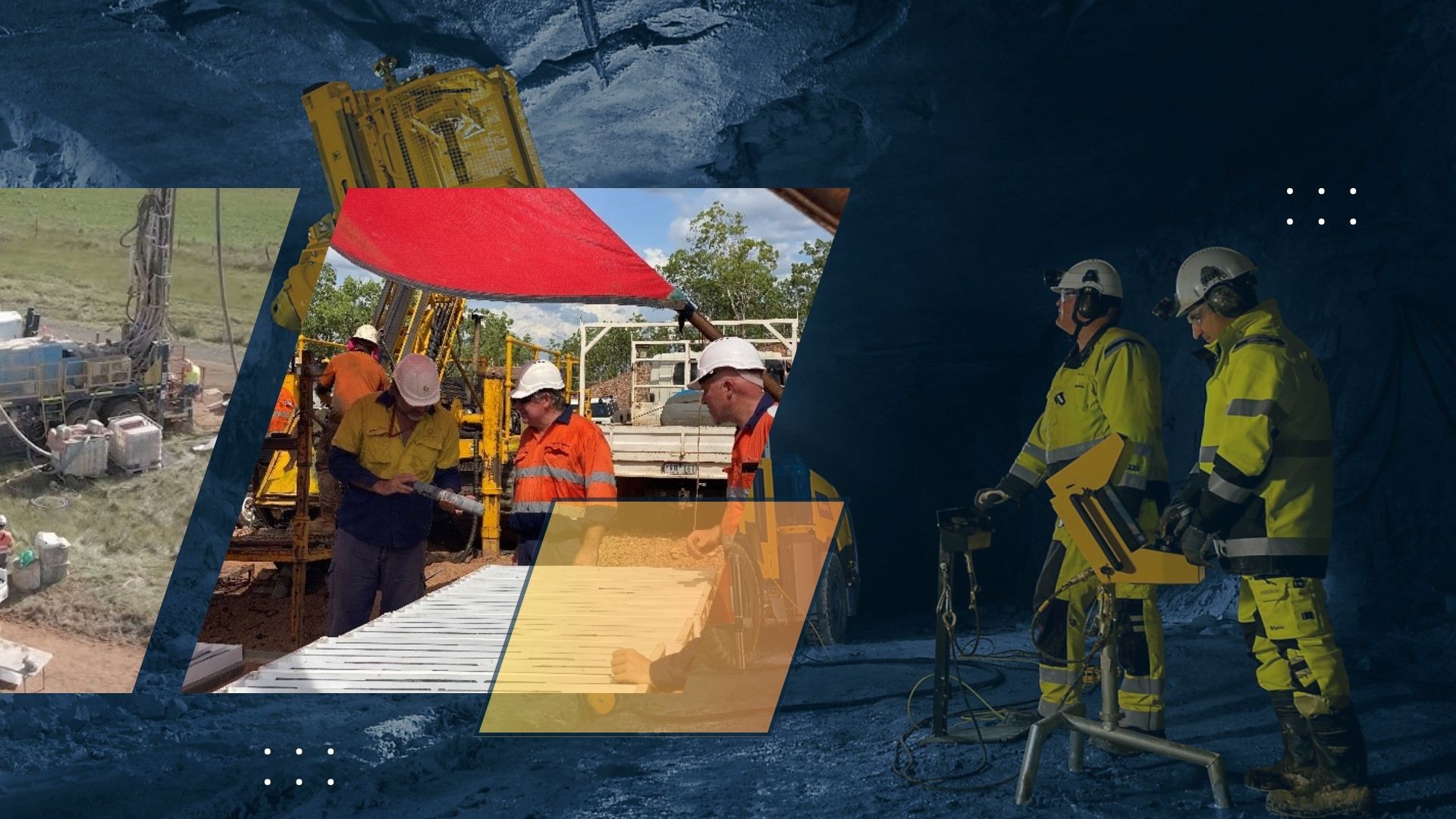
Your Final Drilling Project Report must be submitted to MRT by 5:00pm, 12 November 2027. This report must include all geological logs, geochemical analyses, spectral data, geophysical data, drill core photography, and a rehabilitation report with before-and-after photographs of all drill sites.
All drill core and cutting samples must be lodged with the MRT Mornington Core Library by the reporting date. This is a condition of payment, not an optional obligation. Grant payment is triggered only after MRT accepts your Final Report and confirms lodgement of samples.
Importantly, EDGI funding cannot be counted as part of your Mineral Tenement expenditure commitments. If you are relying on EDGI funding to satisfy licence expenditure obligations, that approach will not work and could put your licence compliance at risk.

FAQ and Glossary
Is the EDGI grant taxable income? Yes. The receipt of EDGI funding may be treated as income by the Australian Taxation Office. Grants attract GST, and grant payments to GST-registered recipients are increased to compensate for the GST payable. You must provide a valid tax invoice to the Department of State Growth. It is strongly recommended that you seek independent advice from a tax advisor or the ATO before submitting your application, as the tax treatment will depend on your specific entity structure and circumstances.
Can I submit more than one EDGI application in Round 12? Yes. Multiple applications can be submitted by the same applicant, provided each proposal represents a genuinely distinct project or target. However, all drill holes within a single prospect or target must be included in one proposal, splitting a single target across multiple proposals to maximise funding is a breach of the guidelines.
What is a “greenfields” project for EDGI purposes? A greenfields project, for EDGI purposes, is one that targets an area with limited or no prior drilling, addresses knowledge gaps in the State’s geological information, and has the potential to stimulate new mineral discoveries. It is distinguished from brownfields (near-mine) exploration, where the geological setting is well-understood and mineralisation has already been defined nearby. The panel applies this distinction using professional judgement, there is no precise spatial or quantitative boundary.
What minerals are prioritised in Round 12? Round 12 continues to prioritise projects targeting commodities on the 2024 Australian Critical Minerals list. This list, maintained by Geoscience Australia, currently includes lithium, cobalt, vanadium, rare earth elements, graphite, manganese, nickel, and a range of other commodities considered strategically important to Australia’s economy and security. Projects targeting these commodities receive a higher assessment weighting. Projects targeting other mineable minerals under the Mineral Resources Development Act 1995 remain eligible but may be ranked lower.
What happens if my actual drilling costs come in below my estimate? If your completed project’s direct drilling costs are less than estimated, MRT may adjust the final grant payment proportionally. The grant covers up to 50% of actual direct drilling costs, capped at the agreed amount in your Funding Agreement. Cost overruns, conversely, are entirely your responsibility.
Can I appeal a rejection? Yes, but only on specific grounds: a conflict of interest by decision-makers, incorrect advice provided by Department of State Growth staff that adversely affected your application, or discrimination on irrelevant grounds such as cultural, religious, gender, or disability-related characteristics. Appeals must be submitted in writing to MRT’s Program Manager within 28 days of the decision notification. Disagreement with the panel’s technical assessment is not grounds for appeal.
What is the confidentiality period for drilling results? After submission of your Final Report, all drilling results, data, and access to drill sample material will be made Open File after a maximum confidentiality period of six months. This is a firm condition of the program, the State Government’s return on investment is the knowledge contributed to Tasmania’s geological data repositories.
Glossary of Key Terms
EDGI: Exploration Drilling Grant Initiative, the Tasmanian Government co-funded drilling program administered by MRT.
Greenfields exploration: Exploration in areas with limited or no prior drilling, targeting geological concepts not previously tested.
Co-funded: A funding arrangement where the government and the applicant share project costs. Under EDGI, the government covers up to 50% of eligible direct drilling costs.
Open File: The public release of geological data to Tasmania’s open data repositories, administered by MRT.
SmartyGrants: The online grants management portal used by the Department of State Growth for all EDGI applications.
MGA94 coordinates: Map Grid of Australia 1994, the coordinate system required for drill collar location reporting under EDGI.
Grant Deed: The formal written contract between the successful applicant and the Crown in Right of Tasmania, governing the terms of the grant.
Acquittal: A statement by the grant recipient confirming that grant funding was used in accordance with the Funding Agreement.
Work Program: The formal plan of exploration activities approved by MRT under the Mineral Resources Development Act 1995, required before drilling can commence.
If you are also exploring complementary funding pathways, whether for related research, equipment, or operational costs alongside your EDGI drilling programme, it is worth reviewing Australian Government business research and innovation funding options that may work in parallel with your state-level grant strategy.
Unsure of your eligibility? Check Your Eligibility Probability Here.